13 October 2026
What is a yard lead? Lead track vs. running track, explained
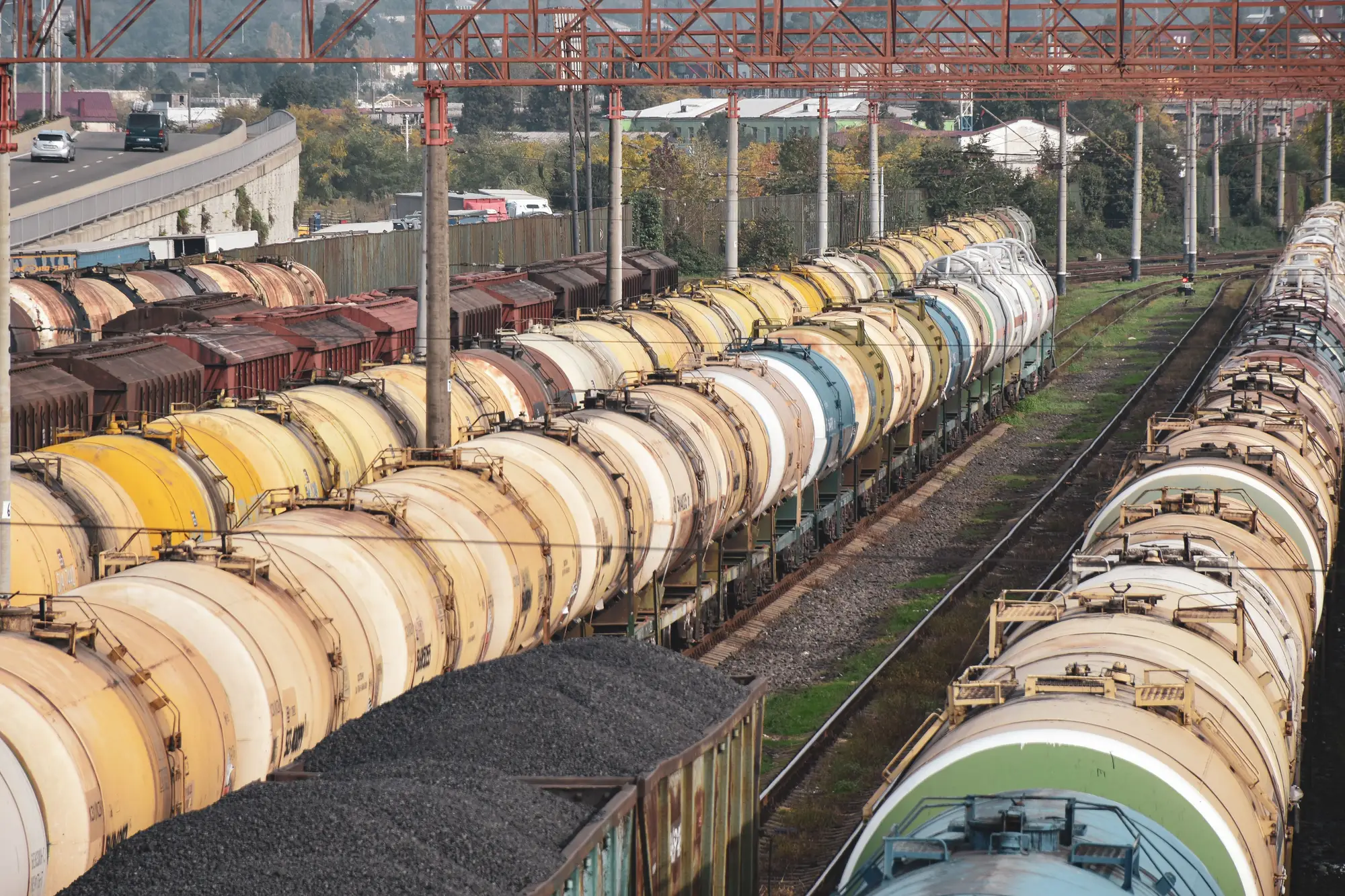
A yard lead is the track a switch crew uses to get cars into and out of the classification tracks without rolling onto the main line to do it. Call it a lead track, a drill track in some territories, or just "the lead" on the radio. It connects the yard throat to the running track or main line, and every pull, shove, and cut happens off of it.
A running track serves movement past the yard. It's a parallel track that lets a crew run a locomotive around a cut of cars, or lets a through move bypass yard switching altogether. Some yards press the running track into service as a second lead when traffic backs up, a workaround crews fall back on when the lead alone can't keep pace with the switching list.
Lead track definition, in plain terms
If you're standing at the switch stand asking which track is the lead, the test is simple. Does this track dead-end functionally into the classification bowl, serving switching moves in and out of the tracks it feeds? Or does it keep going, available to trains and light power that don't need to touch a single car in the bowl? The first is a lead. The second is a running track.
Confusion creeps in because small or older yards blur the line; a single track handles both roles depending on the hour. In those yards, dispatchers and crews lean hard on local rulebook language and job briefings to keep "lead" and "running" meaning the same thing to everyone on the radio.
Yard throat terminology, and how it connects to the lead
The yard throat is where the lead fans out into the ladder, the chain of turnouts that splits one track into the many sidings of a classification yard layout. Walk it end to end and you're walking from a single lead track through a series of switches into a dozen or more parallel tracks, each holding a block of cars sorted by destination, car type, or customer.
Get the throat wrong on a track chart and everything downstream reads wrong too: which siding's full, which one's clear for a cut of grain cars, which track the yardmaster promised to a shipper for Tuesday. That's the layer most yard offices still carry on a clipboard, or a spreadsheet that's a shift behind the cars actually sitting on the ground.
A yard map that shows siding occupancy against the real ladder geometry, refreshed on a set schedule instead of reconstructed from memory, is the kind of reference that keeps the lead-versus-running-track question from turning into a radio argument at 2 a.m. That's the gap Rail Yard Counts is built to close, reading siding occupancy and wagon counts straight off repeat imagery of the yard footprint.
Where this trips people up
A few places the terms get conflated in daily use:
- Calling the running track "the lead" because it's the only track crews use for switching in a tight yard. Works fine until a through move needs the running track at the same time, and nobody planned for both.
- Assuming every classification yard has a dedicated lead at both ends. Plenty of yards, especially older ones, only have one, which shapes how switching gets sequenced for the whole shift.
- Treating "yard throat" as a synonym for "ladder." The throat is the whole convergence zone, approach track included. The ladder is specifically the chain of turnouts within it.
None of this changes with traffic volume or car count, which is exactly why it's worth getting the vocabulary straight once instead of relearning it yard by yard, crew by crew.
If your siding counts depend on knowing which track is doing what this week, a weekly occupancy read built from the actual yard footprint is worth a look.