26 October 2026
What is a ladder track? A rail yard layout glossary entry
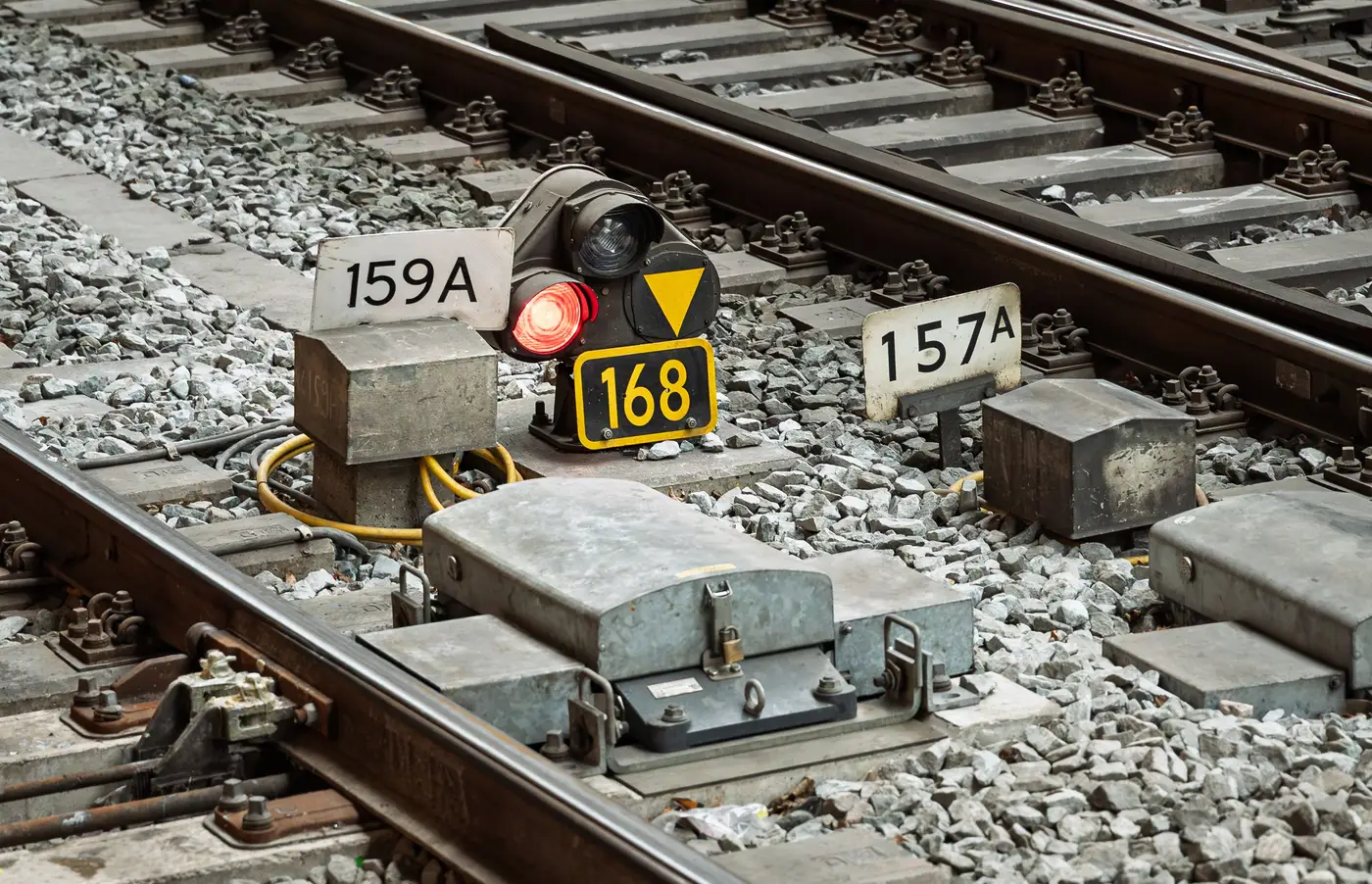
A ladder track is the string of turnouts that connects a lead or main line to a set of parallel yard tracks, one switch after another, so a crew can route a cut of cars onto any leg of the group without backing all the way out and re-entering. Picture a real ladder laid on its side: the lead is the long rail running alongside, and each rung is a turnout dropping off into a siding, a classification track, or storage. That's the whole idea. It's not a single line so much as a chain of switches that makes a yard navigable.
Most yards built for classification work, where inbound cars get sorted by destination or commodity, run the ladder off one end of the bowl. A hump yard or a flat-switching yard both need it: without the ladder, every track would need its own direct connection to the main, which eats land and adds switches nobody can maintain. String the turnouts in sequence instead, and one lead can serve a dozen or more tracks.
Ladder track vs. switching lead
These two terms get used loosely enough on the ground that it's worth separating them. The switching lead is the track a crew works from, the one the locomotive and cars sit on while making a cut or building a train. It's usually a single, continuous track running parallel to the yard tracks, long enough to hold the equipment being switched.
The ladder track is the connector. It's the series of turnouts that peels off the lead into each individual yard track. So a crew pulls a cut down the lead, lines a switch on the ladder, and shoves into whichever siding or classification track that switch points to. The lead gets you there. The ladder gets you in.
Some yard diagrams label the whole assembly, lead plus turnouts, as "the ladder," and in casual yard talk that's fine. But if you're reading a track chart or writing a switching plan, the distinction matters: lead length determines how many cars you can work in one pull, while ladder geometry, the turnout numbers and spacing, determines how fast you can swing between tracks and how tight the clearances are.
Why ladder geometry shows up in capacity planning
Turnout number matters more than it looks like it should. A No. 8 turnout diverges faster and allows lower speed than a No. 10 or 12, so yards built for higher-speed switching or longer cars tend toward the bigger numbers, which also means the ladder itself takes up more real estate. A compact industrial spur might run on a single No. 6 ladder with three or four turnouts total. A Class I classification yard can have a ladder with twenty-plus turnouts feeding a bowl of that many tracks or more.
This geometry is also why siding counts and ladder layout are so tangled up in practice. Every leg hanging off a ladder has a usable length set by where the clearance point sits, that's the spot past which a car fouls the adjacent track, and that number rarely matches the full physical length drawn on paper. Two sidings shown the same length on an old yard diagram can hold a different number of cars depending on where their clearance points land relative to the ladder.
That's the detail that gets lost when nobody's walked the yard in a while. A siding that used to hold fourteen cars might be fouled at ten because of a shifted clearance point or a car parked past the switch. Track charts age; the ladder doesn't move, but what's sitting on each leg of it does, constantly.
For yards running without a ground-truthed inventory system, that gap between the diagram and what's actually parked on each leg is the whole problem. Rail Yard Counts reads the yard footprint from repeat imagery and turns it into a per-siding occupancy overlay, so you're not relying on a track chart from three reorganizations ago to know what's sitting past the ladder this week.
If your yard's ladder feeds sidings nobody's physically counted lately, that's worth a look before the next switch list gets built on stale numbers.