19 October 2026
What a bad order track looks like from overhead imagery
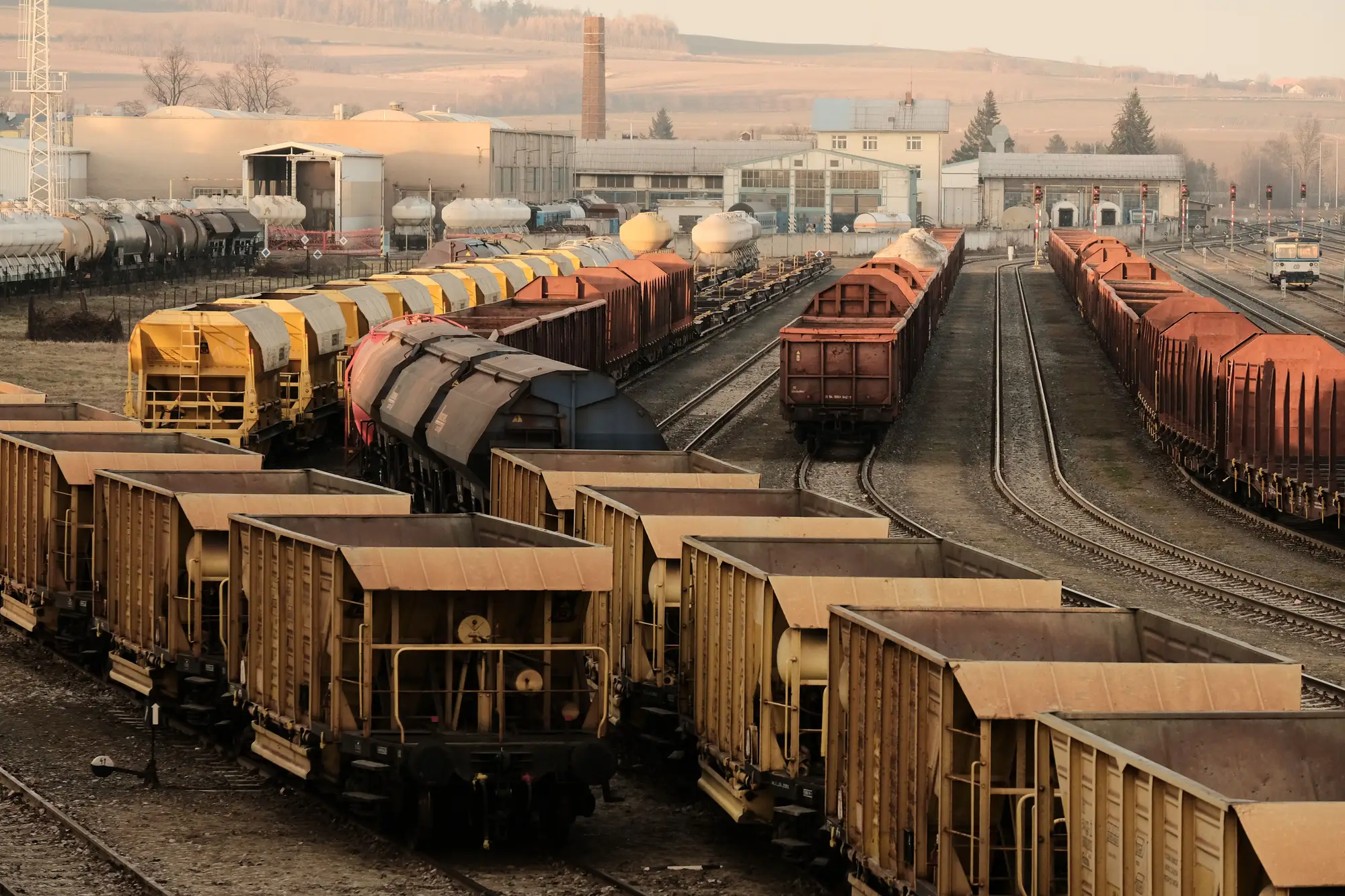
A bad order car is any piece of rolling stock pulled from service because something on it failed inspection: a worn brake shoe, a cracked coupler knuckle, a flat wheel, a leaking air hose. The car gets tagged, usually with a chalk mark or a bad order card on the reporting mark, and it comes off the train it was riding on. From there it needs to get to a repair track before it can go back into a cut.
A bad order track is simply where those cars wait. Most yards keep one or two tracks set aside for this, separate from the classification bowl, so a car that needs a wheel truck or a brake job doesn't sit blocking a track that's trying to build an outbound. Depending on the yard, it might be called the rip track, the repair track, or just "the shop lead," but the function is the same: cars sit there until the car department gets to them, and some sit a lot longer than the paperwork would suggest.
Where bad order tracks sit in a classification yard
Classification yard layout generally runs receiving yard, then the bowl (the classification tracks themselves, sometimes fed by a hump), then a departure yard where blocks get built into outbound trains. Repair and bad order tracks don't fit anywhere in that flow, so yards push them to the margins: a dead-end spur off the shop building, a track at the far end of the bowl that never gets humped into, or a siding parallel to the running track that's functionally a parking lot for cars nobody's in a hurry to move.
That placement is part of what makes a bad order track identifiable from above. It won't follow the turnover pattern of the rest of the yard. Classification tracks fill and empty as trains get built and pulled. A repair track holds the same handful of cars for days, sometimes weeks, while traffic around it keeps moving.
Spotting one in weekly overhead passes
One image won't tell you much. A track with six cars on it could be a bad order track, a storage track, or just a classification track mid-build on a slow day. What separates a bad order track from the rest of the bowl is what happens, or doesn't happen, over several passes.
A siding where the same rolling stock shows up week after week with little or no movement, while every track around it is turning over, is the first tell. Cars sitting at irregular spacing, rather than the tight coupled strings you'd expect in an active classification track, is another. Proximity to a shop building or a repair facility matters too, since that's usually where the car department actually does the work. A track that fits two or three of those patterns, and keeps fitting them for three or four weeks running, is worth a second look even before anyone pulls a waybill.
What overhead imagery can't do is read a reporting mark or confirm the bad order code on file. It can't tell you whether a car's waiting on a wheel set or just waiting on a mechanic. What it can do, if you're pulling the same footprint on a regular cadence, is show you dwell. A car that doesn't move while the rest of the yard turns over is the pattern, and that pattern is visible in imagery long before anyone walks the track with a clipboard.
That's the gap a weekly siding-by-siding occupancy read is built to close for yards that don't have a ground-truthed inventory system telling them which cars sat where last week. If your yard's working from imagery because the switch list doesn't tell the whole story, Rail Yard Counts is built around exactly that problem.