13 October 2026
Stub siding vs. through siding: telling them apart from overhead
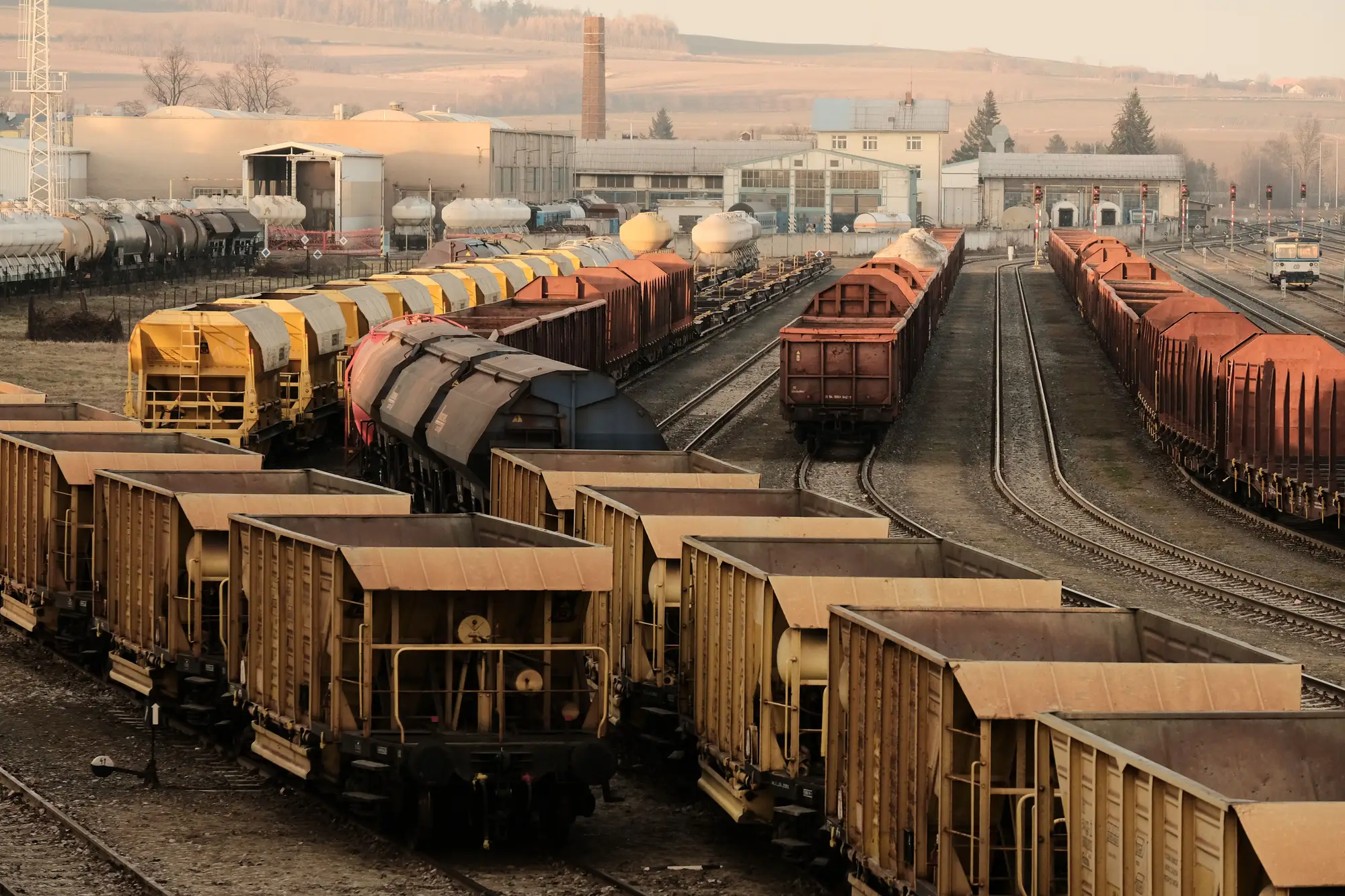
Pull up an overhead shot of almost any classification yard and you'll find both track types sitting side by side, and at 0.3-0.5 m resolution they can look nearly identical if you're only glancing at car counts. What gives them away is the ends, not the cars.
The bumping post is the giveaway
A stub-end track dead-ends. Follow the rail out from the ladder and it terminates, usually at a bumping post or a short section of buffer track, sometimes just a gap in the ballast where the rail's been pulled. In imagery this shows up as a track segment with one open end tied into the ladder and one closed end with nothing beyond it, no connecting rail, no second turnout. Team tracks, some produce spurs, and a lot of older industrial sidings are built this way because the switching move was always going to be a shove-in, pull-out from the same end.
A through siding reads differently because both ends tie back into the running track or the ladder. Trace the rail from one end and it reconnects somewhere else in the yard, often forming the long parallel runs you see in a classic ladder diagram, converging turnouts fanning out from a lead track into six, eight, ten parallel tracks. That second connection is the whole point of a through track yard layout: a crew can enter from one end and clear out the other without a runaround move. If you're scanning imagery and the track just keeps going past where you expected a bumping post, you're probably looking at a through move, not a stub.
The size of the gap between rails at the far end is a decent quick check too. A stub track narrows to a point. A through track holds a constant gauge the whole way because it's still carrying traffic in both directions, not just absorbing a shove.
Why the distinction matters for counting
Stub-end track and through sidings get loaded, cleared, and re-ordered differently, and that changes what an occupancy read on a given week actually tells you.
A stub siding that's full usually stays in that order until someone pulls from the open end, so a high car count there is a reasonably stable signal: nothing's moving until the next scheduled pull. A through siding can get worked from either end in the same shift, so a count on a through track might look stable week over week while the cars sitting on it have completely turned over. Two yards with the same aggregate car count can have very different turnover if one's running mostly stub tracks and the other's mostly through.
It also affects how you should read a partially-occupied track. A stub track that's half full almost always means cars are spotted against the bumping post with open rail behind them, so there's headroom at the open end. A through track that's half full could have cars bunched at either end or split in the middle, and without knowing which end is active that week, you can't say where the open capacity sits.
For anyone doing siding identification imagery work by hand, the practical habit is to trace both ends before you count the cars. Mark the bumping posts first, then work the ladder. Once the stub tracks are flagged, the through sidings are just whatever's left, and the two sets should never be totaled together as if they behave the same way.
If you're already pulling this apart manually for one yard, the same logic scales badly across a network of them. We built a weekly read of yard imagery around exactly this problem, turning siding-level occupancy into a map overlay instead of a spreadsheet someone has to update by hand. Join the waitlist if that's a yard you're trying to keep straight.