7 October 2026
Loaded vs empty rail cars in satellite imagery: what you can actually see
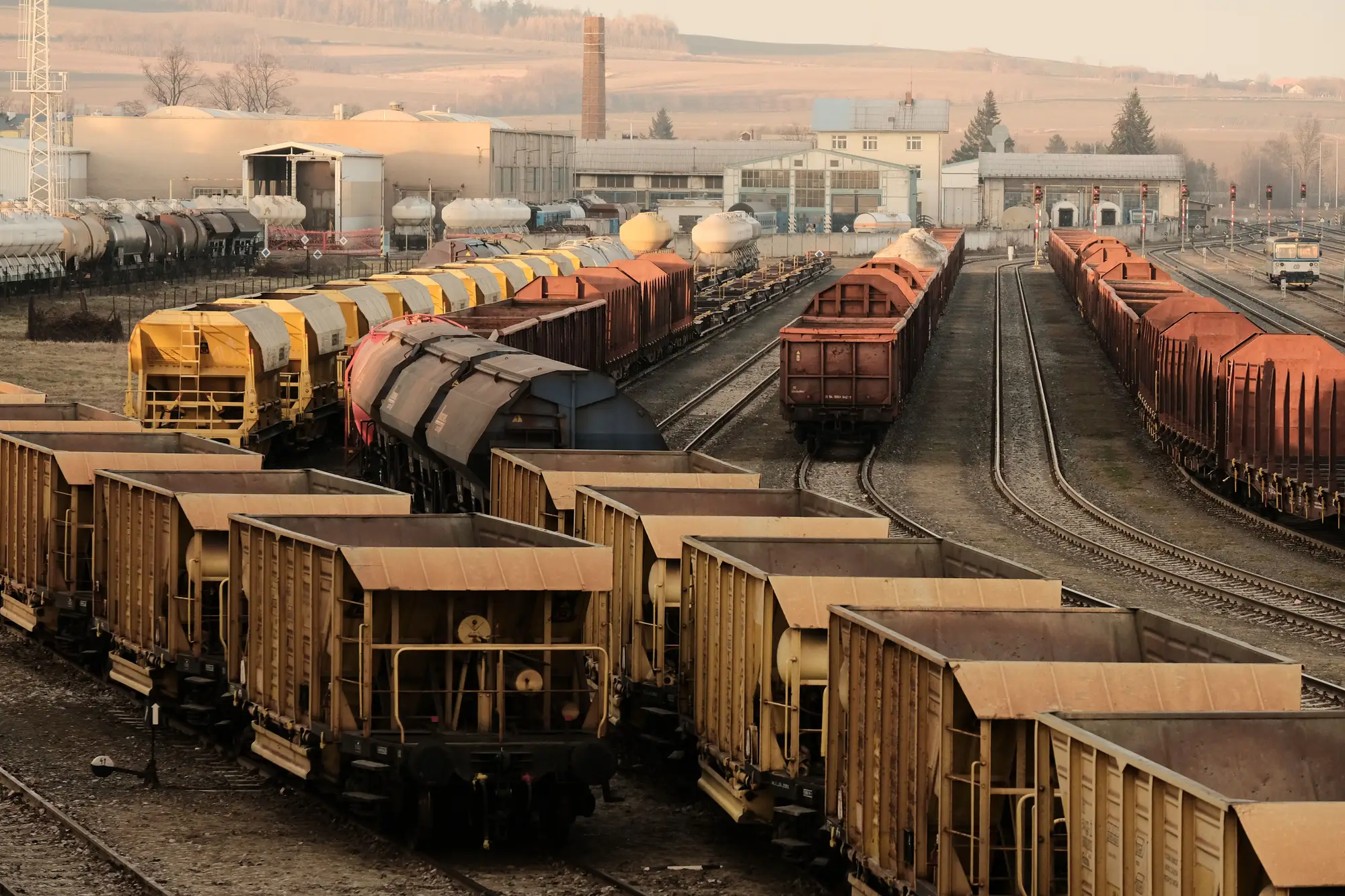
An analyst pulls up a fresh satellite pass of a yard and wants one thing fast: which sidings are full, which cars are loaded, which are sitting empty waiting for a pull. The second question is the harder one, and it's worth being straight about what imagery can and can't resolve.
What 0.5 m resolution actually shows you
At sub-half-meter ground sample distance, a car reads as a rectangle with a shadow. You can count axles if the sun angle cooperates, you can tell a tank car from a boxcar from a flatcar by silhouette, and you can measure consist length down to the car. What you generally can't do is measure how far a car has settled on its springs. The difference between a loaded and empty boxcar's ride height is a matter of inches, and that's below what a single RGB frame from VHR imagery is going to give you with any confidence. If someone tells you they're reading spring compression off satellite imagery, ask to see the pixels.
Open-top cars show the commodity directly
Gondolas, hoppers, coil cars, anything without a roof: these are the easy case. A loaded hopper shows you the commodity. Coal looks like coal, aggregate looks like aggregate, scrap shows its jagged texture and uneven pile. An empty hopper shows you the dark rectangular void of the car's interior, a flat shadow where a loaded car gives an irregular, textured surface. You can call loaded versus empty from a single image with real confidence on this car class, and it's a meaningful chunk of what moves through most yards: aggregate, coal, scrap, grain in open cars.
Covered cars and tank cars: color won't help you
Covered hoppers, boxcars, tank cars: the car body hides the cargo, full stop. A loaded covered hopper and an empty one look identical from directly overhead. Paint scheme, reporting marks, weathering, none of it correlates with what's inside. This is where a lot of informal "tells" people pass around (darker roof means loaded, lighter means empty) don't hold up under scrutiny. The roof color is the roof color. Don't build a read around it.
Reading load state across weekly passes instead of one frame
Comparing two passes a week apart answers the question a single frame can't. A car sitting on an industry siding this week with a visible grain pile, photographed again next week with the siding empty, tells you the car moved and the commodity went with it. A string of covered hoppers parked on a storage track for three straight weekly passes without the consist changing position tells you something too, even without seeing inside the cars: that track is likely holding inventory, not cycling loads. Dwell pattern across repeat imagery substitutes for the direct visual read you can't get on covered equipment. It's an inference built from timing and position rather than a measurement of the car itself. A cadence of weekly passes is what makes that inference possible, and it's a real signal worth building a read around.
Where this fits into a siding count
None of this replaces a terminal's own car-tracking system when one exists. The actual use case is the yard or siding that doesn't have one: a shortline, an industry spur, a yard where the only record of what's parked where is whoever last walked the track with a clipboard. For that situation, a weekly read of the footprint that counts rolling stock by type and flags occupancy per siding gets you most of the way to an inventory without laying eyes on a single waybill. Rail Yard Counts builds exactly that from repeat VHR imagery: a wagon count by car type and a per-siding occupancy read, delivered as an overlay on the yard map, week over week.
If your yard doesn't have a ground-truthed car count today, that weekly overlay is worth a look.