7 October 2026
Boxcar vs gondola vs hopper car: telling rail car types apart from overhead
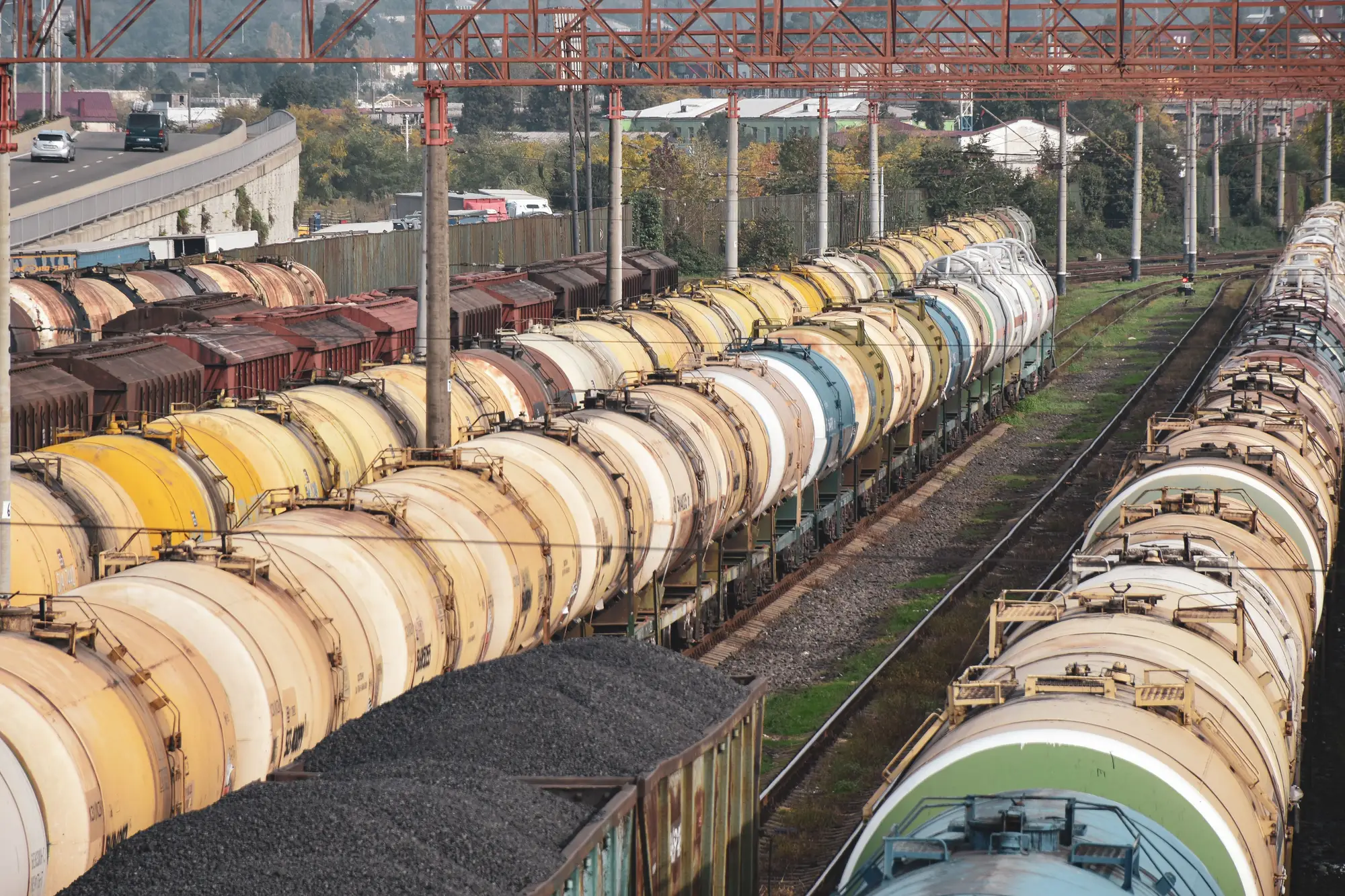
If you've ever squinted at a satellite pass of your own yard trying to figure out what's sitting on Siding 4, you already know the problem. Reporting marks are useless at this resolution. Car type comes down to shape, shadow, and what's visible through the roof, or the lack of one.
Here's what actually separates the three car families when you're looking straight down.
Roofline is the first tell
Boxcars read as a clean, continuous rectangle. Flat or slightly crowned roof, no interruptions, with a faint seam line running partway down one side where the door track sits. From directly overhead that seam is often the only thing that distinguishes a boxcar from a covered hopper, so don't stop at roofline alone.
Gondolas have no roof at all. What you're seeing is either the car floor (empty, usually a flat gray or rust-toned rectangle) or whatever's loaded inside it. Low side walls mean the load sits close to the top edge of the car body, which is why scrap and aggregate loads often show texture right up to the car's outline.
Hopper cars split into two looks. Open hoppers show a trough: the sides slope down toward the discharge gates, so even empty you get a shadow pattern that reads as a shallow V or U running the car's length. Covered hoppers hide that trough under a peaked or rounded roof, closer in profile to a boxcar but narrower and with no visible door seam, just smooth roof panels and hatch covers spaced evenly along the top.
Length and grouping do the rest of the work
Shape alone won't always close the gap, especially between boxcars and covered hoppers at a glance. Length helps.
Boxcars typically run 50 to 60 feet. Gondolas vary more, standard mill gondolas can stretch past 65 feet. Covered hoppers are commonly in the 55 to 60 foot range, close enough to boxcars that you'll want a second clue. Open hoppers tend to run shorter, often 32 to 40 feet, but they're rarely spotted alone. They show up in long, uniform cuts, same length, same spacing, which is itself a tell. A siding full of identical short cars in a tight string is reading as a unit coal or aggregate train before you've confirmed a single roofline.
Load signature, when there is one
This is where open cars give up information a boxcar never will. A loaded coal gondola or hopper shows a rounded, dark mass filling the car body, usually with a slightly different tone than the car sides from weathering and dust. Scrap gondolas look irregular, bright metal catching light unevenly, nothing like the uniform surface of a bulk load. An aggregate hopper reads flatter and more even-toned.
Boxcars and covered hoppers give you nothing here. A closed roof with no load signature is itself useful information: a siding full of cars with clean, uninterrupted roofs and no visible contents is boxcars or covered hoppers. That rules out a chunk of your consist without further guessing.
Where this method runs out
At sub-0.5m imagery you can get roofline, approximate length, and grouping pattern reliably. You will not get reporting marks, car initials, or anything that identifies a specific car owner or lease fleet. For that you still need a ground crew or a yard check. What the imagery gives you is type and count, which siding has twelve covered hoppers versus six boxcars versus an open hopper cut, updated on whatever cadence you're pulling passes.
Doing that by hand across a yard with a dozen sidings, every week, is the kind of task that eats an analyst's afternoon and still leaves room for a miscount on the far ladder track where the sun angle's bad. If you've already got a process for reading roofline and shadow, you understand exactly why a weekly read of the whole yard that sorts wagons by type per siding is worth having instead of building it from a photo and a straightedge every Monday.
If your yard doesn't have a ground-truthed car count system and you're tired of eyeballing it off a satellite pass, that's the gap Rail Yard Counts is built to close.